DIFFERENT METHODS OF ROAD SIGN
 What is a Road Sign?
A road sign (often known as a traffic sign) is a small and colored board that is placed above or along the roads. Facilities provide them to communicate important information about potential dangers, ongoing situations ahead, restricted areas, or any guidance to drivers, pedestrians, and other users on the road. They come in different colors, sizes, shapes, graphics, and instructions to cater to different purposes.

What is the Meaning of Road Sign?
Road sign meaning, or let’s say its purpose, is simply to convey certain information to everyone who is using a road and ensuring their safety. So whenever you see a road sign on board, you must know that it’s there to guide, alert, or warn you about what’s coming next on your way.
Let’s take an example; suppose you’re driving fast on the road, and you see a black and yellow diamond-shaped “Speed Reduce Ahead” sign board. When you reach this sign, you must slow down your vehicle’s speed because there could be a chance that any construction or repair work is going ahead. But if you ignore the sign and proceed at high speed, you may end up putting yourself and others in danger.
Different Types of Road Signs
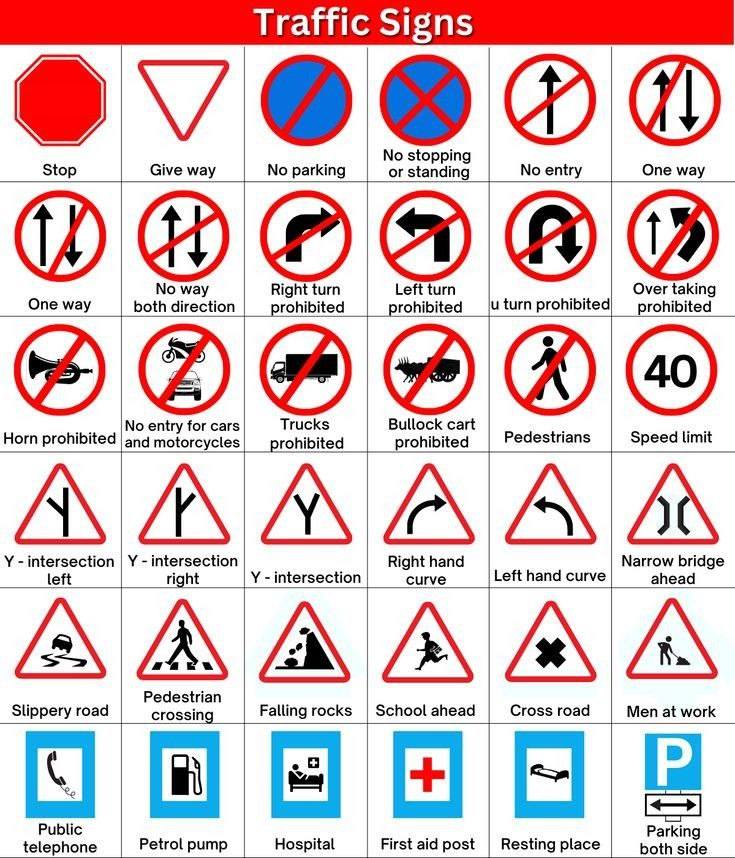
Regulatory Signs
Regulatory signs generally tell you traffic laws and regulations. And that’s why they are must-follow for everyone. They are generally in red, yellow, and black colors. If you ignore them, you put someone in danger or risk a traffic fine. Below, we’ve gathered a list of common regulatory signs:
Stop Sign: They are in red color, octagon-shape. When you reach this sign, you must stop, look both ways, and then proceed to drive.
Yield Sign: Usually in red and white colors, triangle-shaped. It tells you to slow down, give way to other vehicles. If no one’s coming, you can continue to drive slowly.
Do Not Enter: Simply means you cannot enter. If you enter, you’ll put yourself in danger because these signs are mostly used in restricted zones or continuous oncoming traffic areas.
No U-Turn / No Left Turn / No Right Turn: These signs tell you about certain directions. Such as No U-Turn. That means you cannot loop back.
Speed Limit Sign: Most common sign and usually has an allowed speed written on them. So when you see this, you must drive on the allowed speed, otherwise you’ll be fined.
No Parking / No Stopping: Simply put, you’re not allowed to stop or park your vehicle.
One Way: It tells you that this road has one-way traffic, so you also drive in the same direction.
No Overtaking / No Honking: You’ll mostly see these signs in quiet zones, hospital areas, or narrow roads. They tell you that you’re not allowed to overtake and do unnecessary honking.
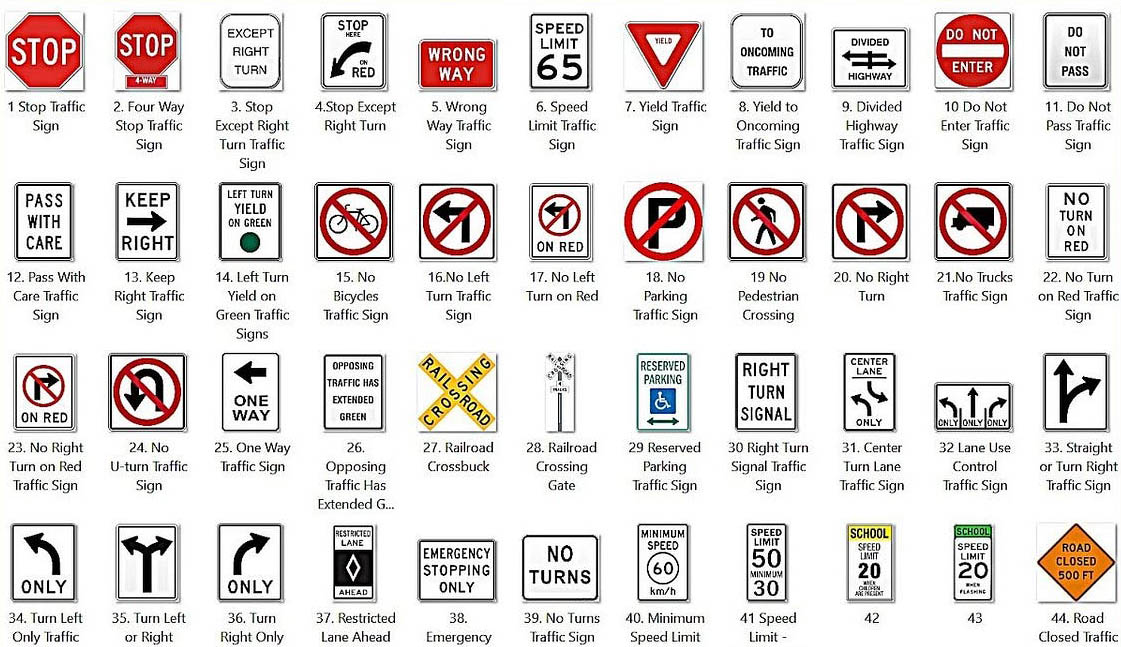
Warning Signs
Warning signs, on the other hand, give you alert or a warning of any potential hazard ahead. They are generally in yellow/ orange color with black symbols or text. Most commonly used on zones where giving drivers warning is crucial. Such as school zones, construction sites, etc. Now let’s discuss common warning signs and what they mean:
Curve Ahead / Sharp Turn: This sign warns you that a curve is coming up (either left or right). So you need to slow down and drive carefully.
Slippery Road: You’ll mostly see them during rainy or foggy areas. They simply warn you the road may be slippery. So you should drive slower and avoid hard brakes.
Pedestrian Crossing: When you reach this signs, you must stop and watch out for pedestrians. Once they cross, you can proceed. You’ll see this sign near schools, offices, or busy markets.
Animal Crossing: You’ll see them near any rural, forest areas or sites where animals often cross. This sign tells you that animals might suddenly cross. So you must drive slowly and watch out for animals.
Construction Ahead: Mostly placed near or around construction sites. Simply tells you that there’s ongoing road work or maintenance up ahead. So you drive slowly and cautiously. Because in such sites, lanes are often blocked, or the surface is uneven.
Traffic Signal Ahead: This sign simply warns you that you’re approaching a signal. So you must prepare to stop (if needed).
Railroad Crossing: You will see this sign 500 feet before crossing. This sign warns you that there’s a train track ahead. So you drive slowly, when you reach a railroad crossing, stop, and look for a train. If the crossing is clear, you can continue to drive.

Guide Signs
These signs generally provide you with guidance about directions, route numbers, distance to nearby locations, service stations, and emergency services. They are usually in green, blue, and brown with white text or directional graphics. Below is a list of common guide signs that you mostly encounter on roads:
Exit Sign: Mostly placed on highways, expressways, and freeways. They guide you about upcoming exits and sometimes include nearby cities or services.
Street Name Sign: You will mostly see them in residential areas. They show you the name of the road and street number. So you can easily navigate.
Route Markers: Commonly used on highways and roadways. They show you the route number or highway name so that you know that you’re driving on the right track.
Service Signs: You’ll often see them on highways or toll plazas. They tell you about nearby fuel stations, hospitals, food spots, rest areas, etc.
Airport/ Railway Station/ Bus Terminal Signs: They generally have a directional graphic and a message on them. That points towards any transport hubs. So you can easily reach the terminals.
Tourist Information Signs: These signs typically tell you about nearby tourist places, such as parks, museums, historical places, or viewpoints.

Informatory Signs
Well, if we talk about informative road signs, they don’t guide, alert, or warn. Instead, businesses place them to share useful information with customers or the public. They are usually in blue and white colors. Let’s now discuss the most common informative road signs:
Parking Sign (P): Tells you where parking is allowed, limited, or restricted.
Public Restroom / Washroom Signs: You will see them in tourist-heavy or customer-focused areas. Such as malls, markets, or service stations. They show the availability of toilets.
Emergency Telephone or First Aid: These signs tell you where help is available in case of accidents or breakdowns.
Fuel Station Ahead: Simply tells you that there is a petrol pump coming up.


Comments
Post a Comment